
Oh, dear friends, there are some culinary experiences that just warm your soul, don’t you agree? For me, the aroma of a perfectly roasted prime rib wafting through the house instantly transports me back to cherished holiday gatherings. Crafting the Juiciest Reverse-Sear Prime Rib Roast is truly a labor of love, a masterpiece of tender, succulent beef that becomes the star of any celebration. It’s a dish that promises rich flavors and an unforgettable dining experience, showing that with a little patience, pure magic can happen in your kitchen.
I remember countless hours spent in my grandmother’s kitchen, not always with prime rib, but certainly learning the patience required for truly special meals. She always said, “Sara, good food takes time, but the joy it brings is worth every minute.” Her wisdom echoes in my heart as I approach dishes like this, knowing that some of the most rewarding moments are found in the careful steps and anticipation.
This recipe for the Juiciest Reverse-Sear Prime Rib Roast is a testament to that philosophy. It’s surprisingly approachable, offering a fool-proof method for achieving restaurant-quality results right at home. The secret lies in a clever technique that ensures a perfectly even cook and that coveted tender texture, making it ideal for holiday feasts or any time you want to impress. My top tip before you even begin? Let your roast come to room temperature for at least an hour before cooking – it makes all the difference!
What You Need to Make This Recipe
Crafting this magnificent roast starts with choosing the right ingredients, and for the Juiciest Reverse-Sear Prime Rib Roast, quality truly shines through. We’ll be focusing on a beautiful bone-in prime rib roast, enhanced by a simple yet aromatic blend of Kosher salt, freshly ground black pepper, garlic powder, and dried thyme. The full list of ingredients and precise measurements are waiting for you in the recipe card below, ready to guide your delicious journey.
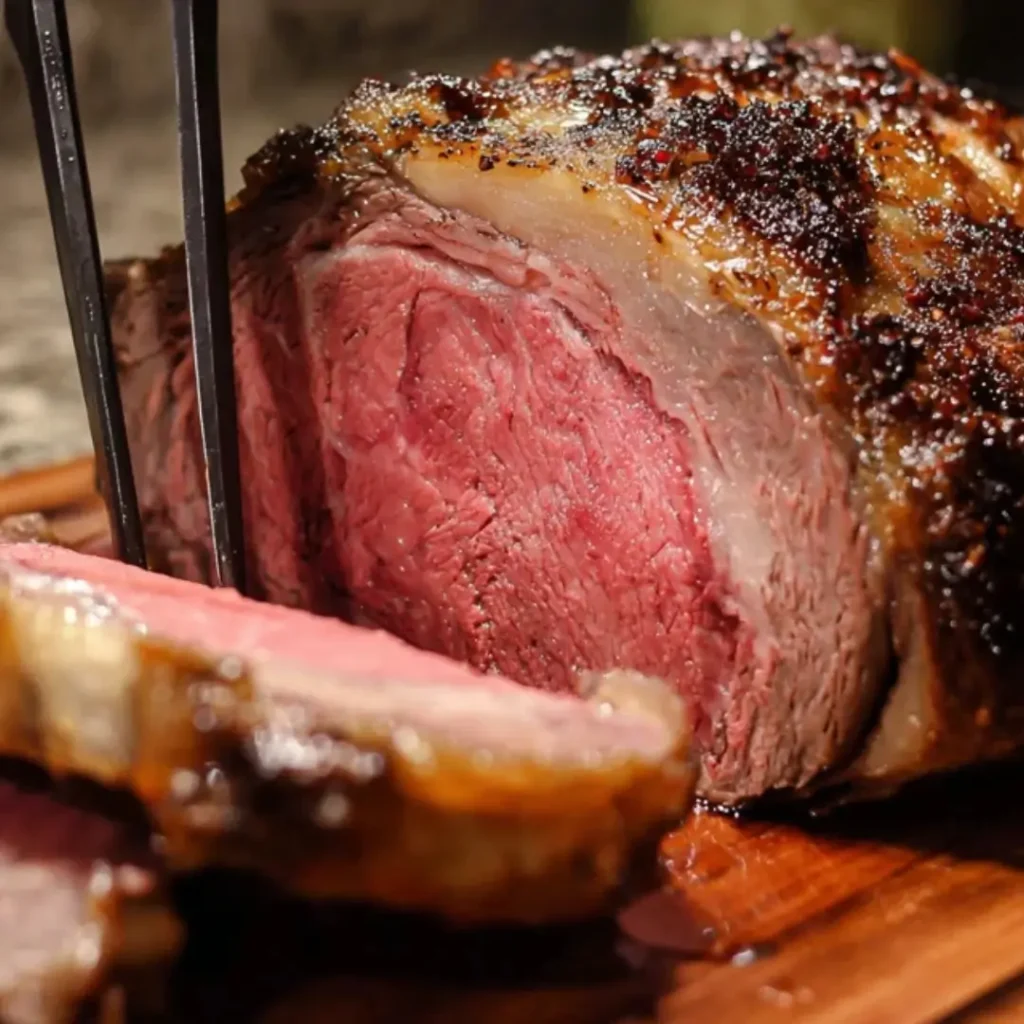
How to Make Juiciest Reverse-Sear Prime Rib Roast
Creating the Juiciest Reverse-Sear Prime Rib Roast is a dance of temperatures, a method I’ve come to adore for its remarkable consistency. We begin by preparing the roast with our flavorful rub, then slow-roast it at a low temperature until it’s nearly perfect. A quick blast of high heat follows to create that irresistible, crispy crust, before a vital resting period. While it rests, you can whisk up an optional, luscious au jus to accompany this show-stopping center-piece. It’s truly a journey to culinary perfection!

Juiciest Reverse-Sear Prime Rib Roast
Ingredients
Equipment
Method
- Remove the prime rib from its packaging and pat it thoroughly dry with paper towels. This is crucial for a good crust.
- In a small bowl, whisk together the kosher salt, black pepper, garlic powder, onion powder, and dried thyme. Rub the entire roast with olive oil, then generously coat all sides with the seasoning mixture, pressing it into the meat.
- Place the seasoned roast on a rack in a large roasting pan. Let it sit at room temperature for at least 2 hours, or up to 4 hours, before cooking. This helps the roast cook more evenly.
- Preheat your oven to 250°F (120°C).
- Insert an oven-safe, instant-read meat thermometer into the thickest part of the roast, avoiding bone.
- Place the roasting pan in the preheated oven and cook until the internal temperature reaches your desired doneness (for medium-rare, aim for 120-125°F / 49-52°C). This will typically take 2.5 to 3.5 hours for an 8-10 lb roast. The reverse-sear method focuses on achieving the ideal internal temperature first, not a specific time. Check periodically, especially after 2 hours.
- Once the roast reaches the desired internal temperature, remove it from the oven and transfer it to a cutting board. Tent it loosely with aluminum foil and let it rest for at least 30-45 minutes. DO NOT skip this step; it’s essential for juiciness. During this rest, the temperature will rise another 5-10 degrees.
- After the first rest, increase your oven temperature to 500°F (260°C). If you made Au Jus, keep the roasting pan with the drippings for later.
- Return the roast to the hot oven (without the thermometer) and sear for 10-15 minutes, or until a beautiful, deep brown crust has formed on the exterior. Keep a close eye on it to prevent burning.
- Remove the roast from the oven once seared. Tent it again loosely with foil and let it rest for another 15-20 minutes. This final rest allows the juices to redistribute throughout the meat, ensuring maximum tenderness and flavor.
- Using a sharp carving knife, carefully separate the bones from the meat. Then, slice the prime rib into desired thickness against the grain.
- While the roast is on its first rest, place the roasting pan (with drippings and any accumulated fat) over two stovetop burners set to medium-high heat. Add the red wine and scrape up any browned bits from the bottom of the pan with a wooden spoon.
- Add the beef broth, fresh rosemary, and fresh thyme. Bring to a simmer and cook for 10-15 minutes, allowing it to reduce slightly and concentrate flavors. Strain the Au Jus through a fine-mesh sieve into a serving bowl, discarding the solids. Serve alongside the carved prime rib.
Notes
Pro Tips for Making This Juiciest Reverse-Sear Prime Rib Roast
Achieving a perfectly cooked Juiciest Reverse-Sear Prime Rib Roast is easier than you might think, especially with a few tricks I’ve learned over the years. Remember, cooking is all about confidence and understanding your ingredients!
First, don’t rush the resting period after the high-temperature sear. I always say, patience is a virtue, especially when it comes to meat! This resting time allows the juices to redistribute throughout the roast, ensuring every slice is incredibly tender and moist. Trust me, it’s worth every minute.
My Secret Trick: For the most flavorful and Juiciest Reverse-Sear Prime Rib Roast, I always pat my prime rib very dry with paper towels before applying the rub. This helps create a beautiful crust during the high-heat sear and allows the seasonings to adhere much better, locking in all those wonderful flavors.
Another tip I swear by is using a reliable meat thermometer. It’s your best friend in the kitchen when roasting larger cuts of meat. Don’t guess; truly, precise temperatures are the key to unlocking the true potential of this dish and ensuring it’s cooked exactly to your liking.
Finally, while the recipe calls for specific seasonings, don’t be afraid to adjust them to your family’s preferences. A little extra rosemary or a hint of smoked paprika can add a delightful twist, making your Juiciest Reverse-Sear Prime Rib Roast uniquely yours.
Fun Variations for Juiciest Reverse-Sear Prime Rib Roast
One of the joys of cooking is making a recipe truly your own, and the Juiciest Reverse-Sear Prime Rib Roast offers delightful opportunities for creative twists. While the classic preparation is simply divine, here are a few ideas to spark your culinary imagination and make it unique.
Herb & Spice Swirls
Instead of just a dry rub, consider making an herb paste! Blend fresh herbs like sage, marjoram, and a touch of lemon zest with olive oil and garlic. Spread this under the twine or directly on the roast before the low-temperature cooking for an extra layer of aromatic flavor. My sister once asked me to add a touch of smoked paprika, and it was a delightful discovery!
Mustard-Crusted Magic
For a tangy, flavorful crust, spread a thin layer of Dijon mustard over the roast before applying your dry rub. The mustard adds a wonderful zing and helps create an even more beautiful crust. A friend of mine loves the subtle heat it adds to their Juiciest Reverse-Sear Prime Rib Roast.
Garlic & Rosemary Studded Roast
Make small incisions all over the roast and insert slivers of fresh garlic and sprigs of rosemary directly into the meat. This infuses the roast with incredible flavor from the inside out, making every bite an aromatic delight. It’s a simple step that yields amazing results!
What to Serve With Juiciest Reverse-Sear Prime Rib Roast
When you’ve crafted such a magnificent main course, selecting the perfect accompaniments for your Juiciest Reverse-Sear Prime Rib Roast can elevate the entire meal into a truly special occasion. I love thinking about how flavors and textures play together on the plate, making every forkful a delight.
For a comforting and classic pairing, I always recommend a creamy mashed potato or a rich potato gratin. The buttery softness complements the tender beef beautifully. Another wonderful option is roasted asparagus or green bean almondine, adding a vibrant green crunch and freshness to balance the richness of the roast.
If you’re looking for a quick serving idea, a simple mixed green salad with a light vinaigrette is always a good choice. It cuts through the richness and cleanses the palate wonderfully. And, of course, don’t forget the au jus we made—it’s essential for drizzling over every glorious slice of your Juiciest Reverse-Sear Prime Rib Roast!
How to Store Juiciest Reverse-Sear Prime Rib Roast
Properly storing your leftover Juiciest Reverse-Sear Prime Rib Roast means you can savor its deliciousness for days to come! I always want to ensure that every bite, even later, tastes as incredible as the first.
Fridge Storage
Once your roast has cooled completely, carve any remaining meat off the bone and store it in an airtight container in the refrigerator. This will keep it fresh and flavorful for up to 3-4 days. I like to keep slices separate from any au jus or gravy, adding it just before reheating to prevent the meat from becoming soggy.
Freezer Tips
For longer storage, slice the cooked prime rib and place the slices in a single layer on a baking sheet to freeze for about an hour. Once firm, transfer them to a freezer-safe bag or airtight container, removing as much air as possible. Frozen Juiciest Reverse-Sear Prime Rib Roast will keep for up to 2-3 months. When ready to enjoy, thaw overnight in the refrigerator.
Reheating Methods
To reheat, I always recommend placing slices in a baking dish with a splash of beef broth or au jus, covering it loosely with foil, and warming it gently in a 250°F (120°C) oven until heated through. This low and slow method helps prevent the meat from drying out. My personal tip? A light dusting of freshly ground black pepper after reheating brings out its robust flavor beautifully!
Nutritional Benefits
While the Juiciest Reverse-Sear Prime Rib Roast is undeniably a celebratory treat, it also offers some excellent nutritional benefits. Prime rib is a fantastic source of high-quality protein, essential for muscle building and repair, and provides important vitamins and minerals like iron and B vitamins. It’s a satisfying and nourishing centerpiece that proves a luxurious meal can also be a wholesome one.
FAQs
Faq 1
Why is the reverse sear method recommended for prime rib?
The reverse sear method for the Juiciest Reverse-Sear Prime Rib Roast involves slow roasting at a low temperature, which cooks the meat more evenly from edge to center. This prevents the outer layers from overcooking before the inside reaches temperature, resulting in an incredibly tender interior and a beautiful, caramelized crust.
Faq 2
How long should I rest the prime rib after cooking?
Resting your Juiciest Reverse-Sear Prime Rib Roast is crucial! I always recommend resting it for at least 20-30 minutes after the high-temperature sear. This allows the juices to redistribute throughout the meat, ensuring every slice remains incredibly tender, moist, and flavorful.
Faq 3
Can I make the au jus ahead of time?
Yes, you can certainly prepare the au jus for your Juiciest Reverse-Sear Prime Rib Roast ahead of time! Simply make it as directed, let it cool, and store it in an airtight container in the refrigerator for up to 3 days. Reheat gently on the stovetop when you’re ready to serve.
Faq 4
How do I know when my prime rib is cooked to my preferred doneness?
The best way to determine doneness for your Juiciest Reverse-Sear Prime Rib Roast is by using a reliable meat thermometer. For medium-rare, aim for an internal temperature of 120-125°F before resting. The temperature will rise a few degrees as it rests.
Conclusion
Creating the Juiciest Reverse-Sear Prime Rib Roast is more than just cooking a meal; it’s about crafting an experience, a centerpiece that brings smiles and creates lasting memories around the table. With its perfectly tender interior and exquisite crust, this recipe is a testament to the magic that happens when a little love and patience meet simple, quality ingredients. I truly hope you’ll embrace the joy of this process, sharing a magnificent, home-baked delight that will be cherished by all. Happy roasting, my sweet friends!