Ingredients
Equipment
Method
Step 1: Activate Starter & Autolyse
- Ensure your sourdough starter is active and bubbly, fed 4-12 hours prior and at its peak (doubled in size). In a large mixing bowl, combine the warm water and active sourdough starter. Whisk until the starter is mostly dissolved.
- Add the bread flour and whole wheat flour to the bowl. Mix with your hands or a dough scraper until no dry spots remain and a shaggy dough forms. Cover the bowl with plastic wrap or a shower cap and let it rest for 30 minutes (autolyse). This allows the flour to fully hydrate.
Step 2: Add Salt, Sugar, and Butter
- After the autolyse, sprinkle the salt and sugar over the dough. Add the softened butter cubes. Using wet hands, knead the dough in the bowl for 5-7 minutes until the salt, sugar, and butter are fully incorporated and the dough starts to feel smoother and more elastic.
Step 3: Bulk Fermentation (Stretch & Folds)
- Cover the bowl again and let the dough rest for 30 minutes. Over the next 2-3 hours, perform 4 sets of stretch and folds, spaced 30 minutes apart. For each set, lightly wet your hands, grab a portion of the dough from one side, stretch it up, and fold it over the center. Rotate the bowl and repeat 3-4 times until all sides have been stretched and folded. Recover the dough after each set.
- After the final set of stretch and folds, allow the dough to continue bulk fermenting at room temperature (72-76°F / 22-24°C) until it has increased in volume by about 50-75% and feels light and airy. This can take anywhere from 3 to 7 hours depending on your starter's strength and ambient temperature.
Step 4: Pre-shaping & Final Shaping
- Lightly flour your work surface. Gently turn the dough out onto the surface. Preshape the dough into a loose rectangle or round. Let it rest, uncovered, for 15-20 minutes to relax the gluten.
- Lightly grease a 9x5 inch loaf pan. To shape the loaf, gently flatten the dough into a rectangle. Fold the top third of the dough down to the center, pressing firmly. Fold the bottom third up and over the previous fold, creating a tighter rectangle. Then, starting from one short end, roll the dough tightly into a log. Pinch the seam closed. Place the shaped dough seam-side down into the prepared loaf pan.
Step 5: Final Proof
- Cover the loaf pan with plastic wrap or a clean kitchen towel. Proof at room temperature for 2-4 hours, or until the dough has nearly doubled in size and feels very puffy. Alternatively, for a more developed flavor and easier handling, cold proof in the refrigerator for 8-16 hours.
Step 6: Bake
- Preheat your oven to 400°F (200°C) with a rack in the center. If cold proofing, remove the dough from the fridge while the oven preheats.
- Bake for 40-50 minutes, or until the crust is deeply golden brown and the internal temperature reaches 200-210°F (93-99°C). If the crust is browning too quickly, you can loosely tent it with aluminum foil for the last 15-20 minutes.
Step 7: Cool
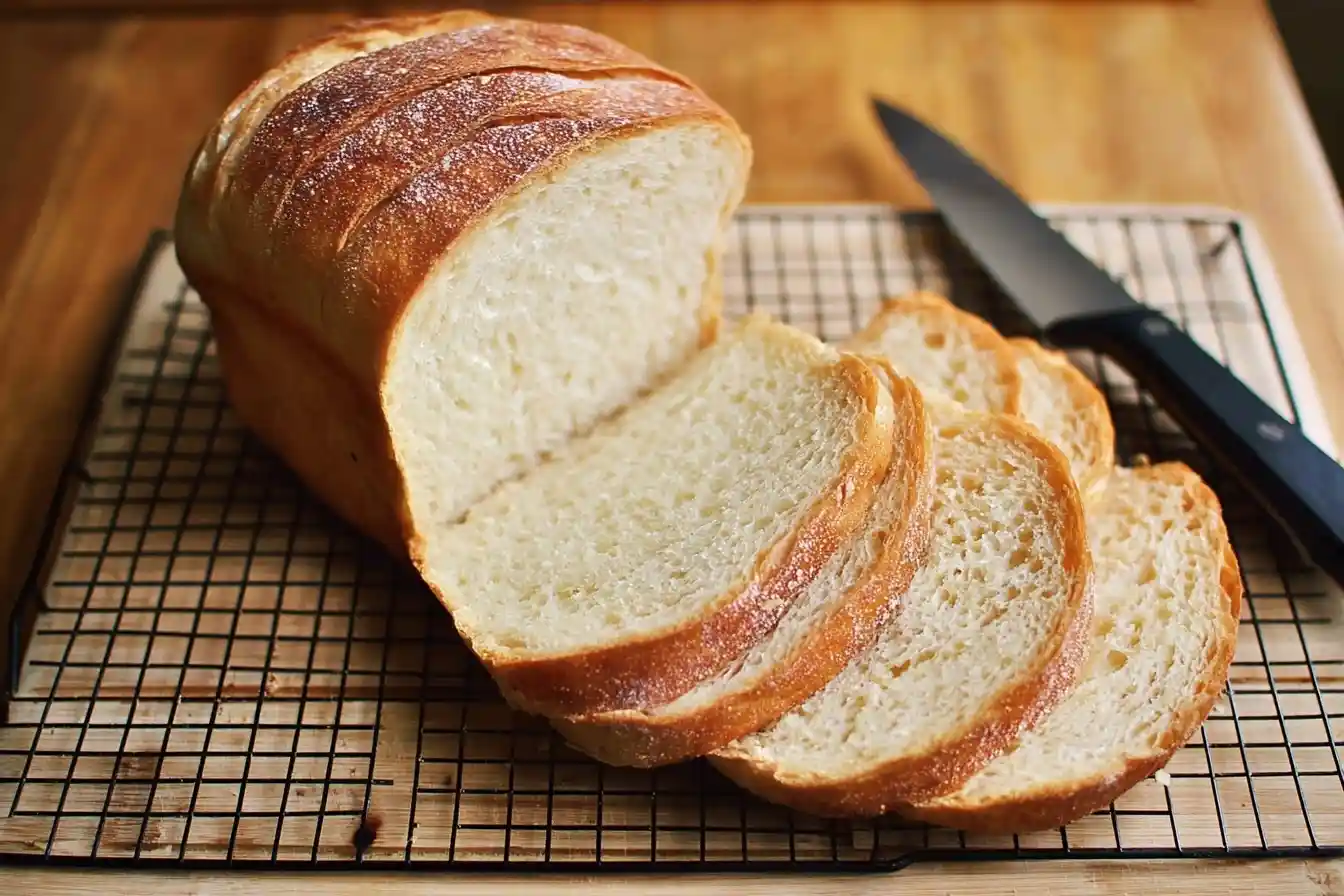
- Once baked, immediately remove the loaf from the pan and transfer it to a wire rack to cool completely before slicing (at least 2-3 hours). Slicing hot bread can result in a gummy texture.
Notes
Sourdough bread-making is a multi-stage process with long fermentation times not reflected in the 'prep_time' or 'total_time' metrics which typically measure active hands-on time. The full timeline for this recipe, from mixing to cooling, can span 8-24 hours depending on fermentation temperatures and proofing methods.
Tips:
* **Hydration**: Adjust water slightly based on your flour's absorption. The dough should be tacky but manageable.
* **Windowpane Test**: After adding the butter, sugar, and salt, the dough should pass the windowpane test (stretch a small piece thinly enough to see light through it without tearing).
* **Fermentation**: The bulk fermentation and final proof times are estimates. Rely more on the dough's feel and appearance (puffiness, jiggle) than strict timing.
* **Hydration**: Adjust water slightly based on your flour's absorption. The dough should be tacky but manageable.
* **Windowpane Test**: After adding the butter, sugar, and salt, the dough should pass the windowpane test (stretch a small piece thinly enough to see light through it without tearing).
* **Fermentation**: The bulk fermentation and final proof times are estimates. Rely more on the dough's feel and appearance (puffiness, jiggle) than strict timing.