Ingredients
Equipment
Method
Prepare for Curdling
- Line a fine-mesh sieve with 2-3 layers of cheesecloth, making sure there's enough overhang to gather later. Place the sieve over a large bowl to collect the whey.
- In a large, heavy-bottomed pot, combine the whole milk, heavy cream (if using), and salt. Stir gently to combine.
Heat and Curdle
- Heat the milk mixture over medium-high heat, stirring occasionally to prevent scorching on the bottom. Continue heating until it reaches a temperature of 195-200°F (90-93°C). It should be steaming heavily and just beginning to show small bubbles around the edges, but do not let it come to a rolling boil.
- Remove the pot from the heat. Gently pour in the lemon juice or white vinegar, stirring just once or twice to incorporate. Let the mixture sit undisturbed for 10-15 minutes. During this time, the milk solids (curds) will visibly separate from the greenish-yellow liquid (whey).
Drain and Finish
- Using a slotted spoon, carefully scoop the curds from the pot and transfer them to the prepared cheesecloth-lined sieve. Try to get as much of the solid curds as possible, leaving the whey behind.
- Let the ricotta drain in the sieve for 15-30 minutes, or longer if you prefer a drier, firmer ricotta. The longer it drains, the thicker it will become. For a creamier, softer texture, drain for less time.
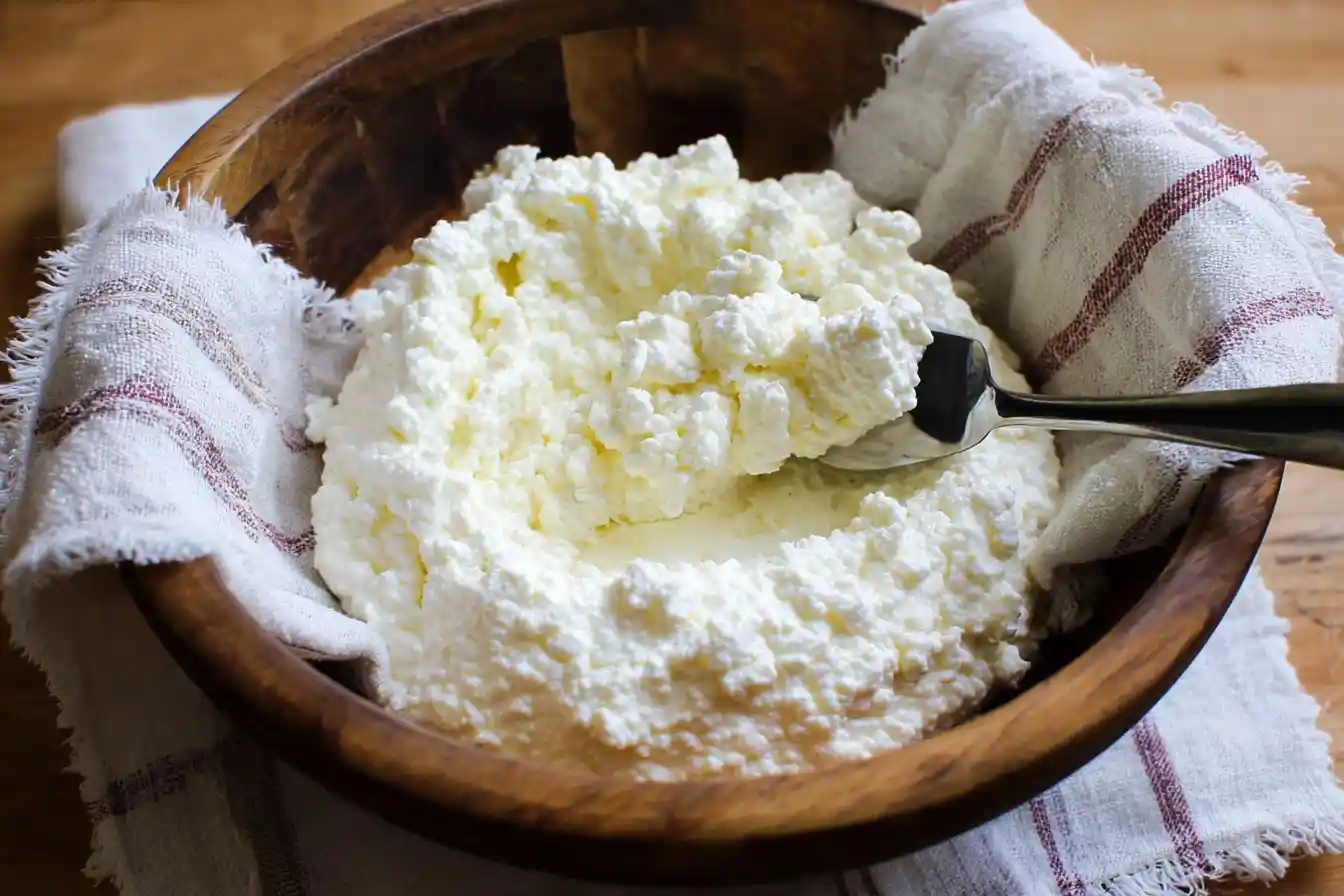
- Transfer the fresh ricotta to an airtight container. Use immediately or refrigerate. Enjoy your homemade ricotta!
Notes
Milk Quality: Using good quality whole milk (not ultra-pasteurized) will yield the best results. The cream adds richness but can be omitted for a lighter ricotta.
Acid Choice: Both lemon juice and white vinegar work well. Lemon juice imparts a very subtle, fresh tang, while vinegar is more neutral.
Yield Variation: The amount of ricotta you get will vary slightly depending on the milk's fat content and how long you drain it.
Storage: Homemade ricotta can be stored in an airtight container in the refrigerator for up to 3-4 days.
Using Whey: Don't discard the whey! It's nutritious and can be used in baking (replacing water in bread recipes), smoothies, or as a liquid for cooking grains.
Acid Choice: Both lemon juice and white vinegar work well. Lemon juice imparts a very subtle, fresh tang, while vinegar is more neutral.
Yield Variation: The amount of ricotta you get will vary slightly depending on the milk's fat content and how long you drain it.
Storage: Homemade ricotta can be stored in an airtight container in the refrigerator for up to 3-4 days.
Using Whey: Don't discard the whey! It's nutritious and can be used in baking (replacing water in bread recipes), smoothies, or as a liquid for cooking grains.