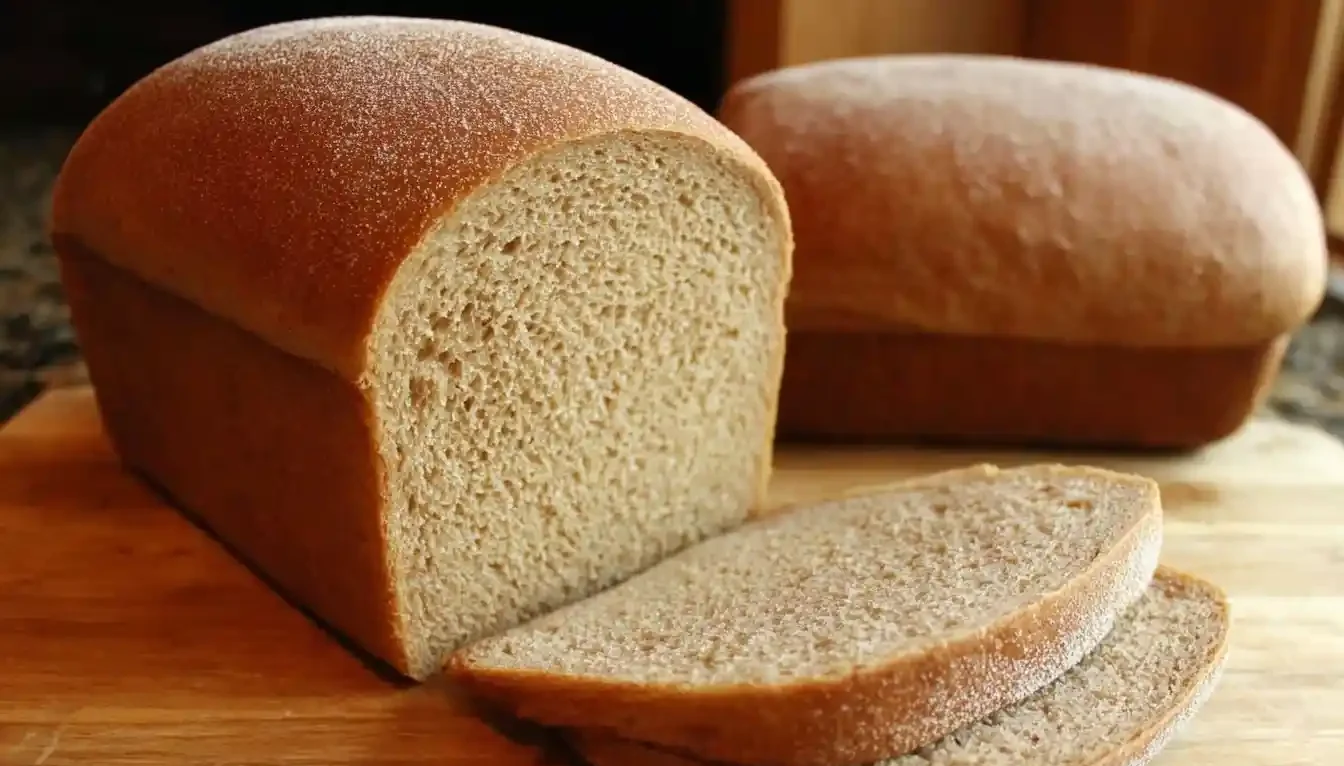
Ingredients
Equipment
Method
Step 1: Activate the Yeast
- In a large mixing bowl (or the bowl of a stand mixer), combine the warm water and honey (or maple syrup/sugar). Sprinkle the active dry yeast over the top. Stir gently, then let it sit for 5-10 minutes, until the mixture is foamy. This indicates the yeast is active.
Step 2: Mix the Dough
- Add the olive oil, salt, vital wheat gluten (if using), and 3 cups of whole wheat flour to the yeast mixture. If using a stand mixer, attach the dough hook and mix on low speed until just combined. If mixing by hand, use a sturdy spoon or spatula.
- Gradually add the remaining 1.5 to 2 cups of whole wheat flour, 1/2 cup at a time, mixing until the dough starts to come together and pull away from the sides of the bowl. The dough should be soft, slightly sticky, but manageable.
Step 3: Knead the Dough
- If using a stand mixer, knead on medium-low speed for 8-10 minutes until the dough is smooth and elastic. If kneading by hand, turn the dough out onto a lightly floured surface and knead for 10-12 minutes, adding small amounts of flour only if the dough is too sticky to handle.
Step 4: First Rise (Bulk Fermentation)
- Lightly grease a clean large bowl with 1 tsp of olive oil. Transfer the kneaded dough to the oiled bowl, turning it once to coat all sides. Cover the bowl with plastic wrap or a clean kitchen towel. Place in a warm, draft-free spot for 60-90 minutes, or until the dough has doubled in size.
Step 5: Shape the Loaf
- Lightly grease a 9x5 inch loaf pan. Gently punch down the risen dough to release the air. Turn the dough out onto a lightly floured surface. Flatten it into a rectangle approximately 9 inches wide.
- Starting from one of the 9-inch sides, tightly roll the dough into a log. Pinch the seam closed and tuck the ends under to create a smooth, taut loaf. Place the shaped dough seam-side down into the prepared loaf pan.
Step 6: Second Rise (Proofing)
- Cover the loaf pan loosely with plastic wrap or a kitchen towel. Return it to a warm, draft-free spot for 45-60 minutes, or until the dough has nearly doubled in size again and looks puffy. It should rise about an inch above the rim of the pan.
Step 7: Bake the Bread
- Preheat your oven to 375°F (190°C) about 15 minutes before the second rise is complete.
- Bake the bread for 30-35 minutes, or until the crust is golden brown and the internal temperature reaches 200-210°F (93-99°C) when measured with an instant-read thermometer.
Step 8: Cool Completely
- Remove the bread from the oven and immediately turn it out onto a wire cooling rack. Let it cool completely for at least 1 hour before slicing. Slicing warm bread can result in a gummy texture.
Notes
For best results, weigh your flour using a kitchen scale for accuracy. If you don't have vital wheat gluten, the bread will still be delicious but may be a bit denser. Store leftover bread in an airtight container at room temperature for up to 3-4 days, or slice and freeze for longer storage. You can substitute 1.5 cups of warm milk for the water for an even richer, softer crumb, but adjust flour slightly as needed.