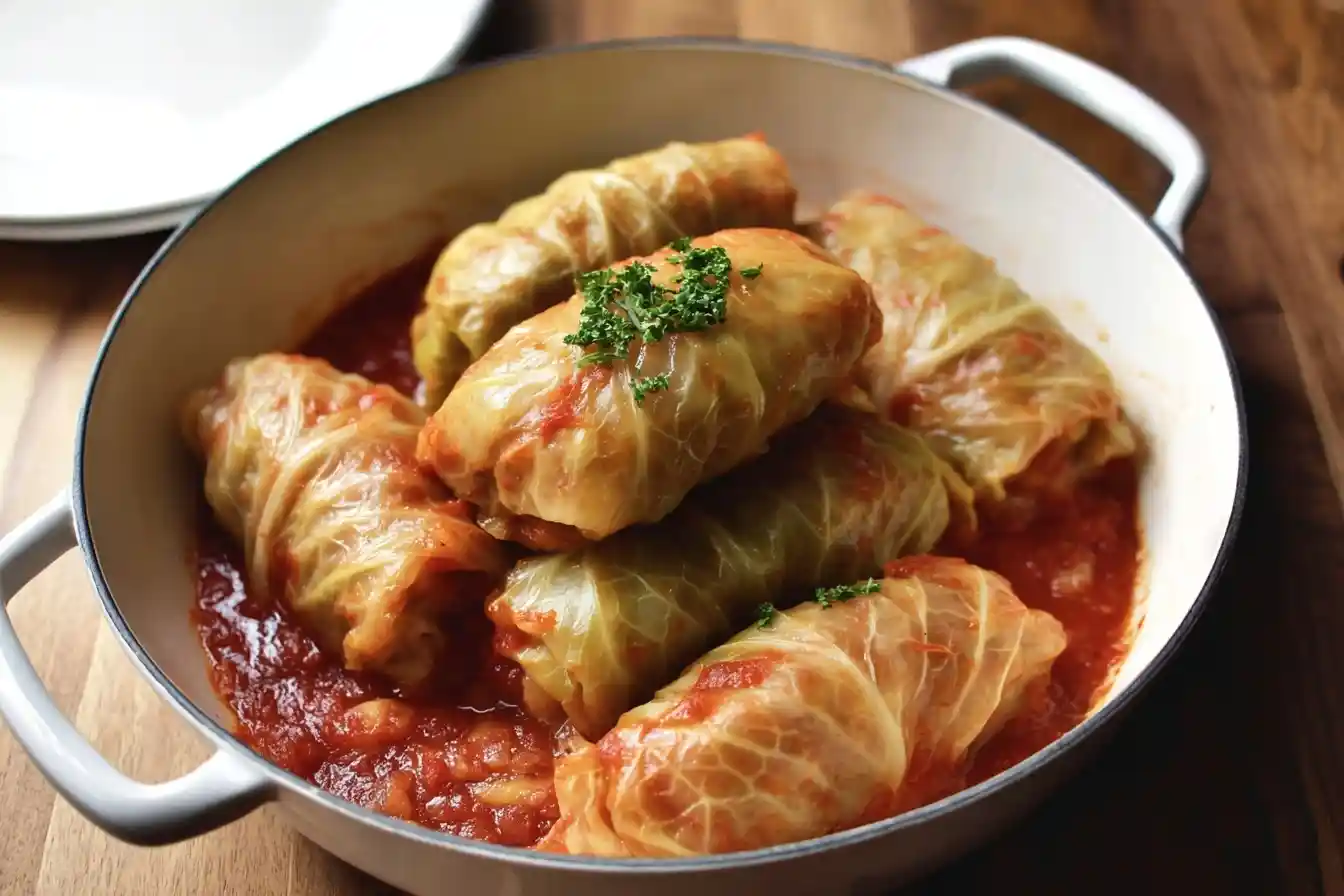
Ingredients
Equipment
Method
Prepare the Cabbage
- Carefully core the cabbage head by cutting around the stem with a sharp knife, trying not to pierce too many leaves.
- Bring a large pot of salted water to a rolling boil. Submerge the cored cabbage head into the boiling water.
- As the outer leaves soften (after 5-10 minutes), carefully peel them off with tongs. Continue boiling and peeling leaves until you have about 12-16 large, pliable leaves. Trim any thick veins from the base of each leaf to make them easier to roll. Set aside to cool.
Prepare the Filling
- In a large skillet or Dutch oven, heat 1 tbsp olive oil over medium heat. Add the chopped onion and sauté until softened, about 5-7 minutes.
- Add the minced garlic and finely chopped mushrooms. Cook, stirring occasionally, until the mushrooms have released their liquid and browned slightly, about 8-10 minutes.
- Remove from heat. In a large mixing bowl, combine the cooked onion and mushroom mixture with the cooked lentils, rinsed uncooked rice, fresh parsley, fresh dill, smoked paprika, dried oregano, salt, and black pepper.
- Add 1/2 cup vegetable broth and mix thoroughly. The mixture should be moist but not wet.
Prepare the Sauce
- In the same large skillet or Dutch oven (or a clean one), heat 2 tbsp olive oil over medium heat. Add the chopped onion and sauté until softened, about 5-7 minutes.
- Add the minced garlic and cook for another minute until fragrant.
- Stir in the crushed tomatoes, tomato sauce, apple cider vinegar, brown sugar, salt, black pepper, and 1 cup vegetable broth. Bring the sauce to a gentle simmer, then reduce heat to low and let it cook uncovered while you roll the cabbage.
Assemble the Cabbage Rolls
- Lay a softened cabbage leaf flat on a clean surface with the stem end facing you. Place about 1/4 to 1/3 cup of the filling mixture near the stem end of the leaf.
- Fold the sides of the cabbage leaf over the filling, then roll tightly from the stem end up to create a compact roll. Repeat with the remaining leaves and filling.
- Pour about half of the prepared tomato sauce into the bottom of a large Dutch oven or oven-safe pot.
- Arrange the assembled cabbage rolls snugly in a single layer over the sauce. If necessary, you can layer them, but try to keep them as single layer as possible for even cooking.
- Pour the remaining tomato sauce over the cabbage rolls, ensuring they are mostly submerged. Add a little more vegetable broth if needed to cover.
Cook the Cabbage Rolls
- Bring the pot to a gentle simmer on the stovetop. Once simmering, cover the pot tightly and reduce the heat to low.
- Simmer for at least 75-90 minutes, or until the rice in the filling is tender and the cabbage is very soft. Check periodically to ensure there's enough liquid; add a splash of broth or water if it seems too dry.
- Alternatively, you can bake them: Preheat oven to 350°F (175°C). Cover the pot and bake for 1.5 to 2 hours, or until the cabbage is very tender and the rice is cooked through.
Serve
- Carefully transfer the vegan cabbage rolls to serving plates. Garnish with fresh chopped dill, if desired. Serve hot with a side of crusty bread or vegan sour cream.
Notes
Storage: Leftover cabbage rolls can be stored in an airtight container in the refrigerator for up to 4-5 days. They also freeze well for up to 3 months. Thaw overnight in the fridge and reheat gently on the stovetop or in the oven.
Variations: For a smoky flavor, add a dash of liquid smoke to the filling. You can also experiment with different grains like quinoa or barley instead of rice (adjust cooking time as needed). Add shredded carrots or bell peppers to the filling for extra vegetables.
Rolling Tips: If some leaves tear, you can still use them by patching them together, or using smaller torn pieces to line the bottom of the pot to prevent rolls from sticking.
Variations: For a smoky flavor, add a dash of liquid smoke to the filling. You can also experiment with different grains like quinoa or barley instead of rice (adjust cooking time as needed). Add shredded carrots or bell peppers to the filling for extra vegetables.
Rolling Tips: If some leaves tear, you can still use them by patching them together, or using smaller torn pieces to line the bottom of the pot to prevent rolls from sticking.