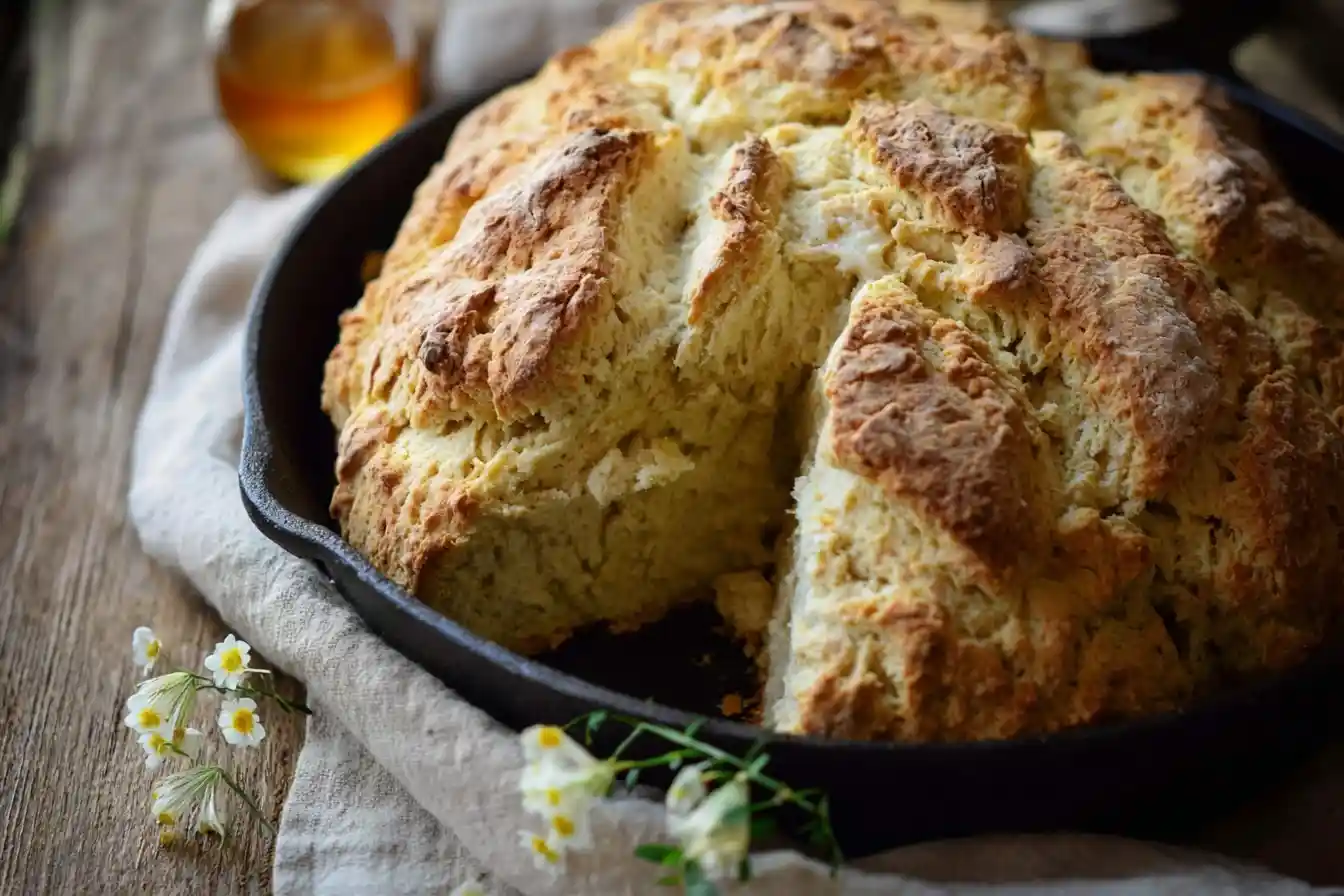
Ingredients
Equipment
Method
Preparation
- Preheat your oven to 400°F (200°C). Place the 10-inch cast iron skillet in the oven while it preheats. This helps create a crispy bottom crust.
Mixing the Dough
- In a large mixing bowl, whisk together the flour, baking soda, salt, and granulated sugar (if using). If adding raisins, stir them in now, ensuring they are evenly distributed.
- Make a well in the center of the dry ingredients. Pour in the cold buttermilk. Use a wooden spoon or a sturdy spatula to gently mix until just combined. The dough will be shaggy and sticky; avoid overmixing, as this can lead to a tough bread.
- Turn the dough out onto a lightly floured surface. Knead briefly, just enough to bring it together into a round, slightly flattened loaf, about 1-2 minutes. Do not overwork the dough.
Baking the Bread
- Carefully remove the hot cast iron skillet from the oven using oven mitts. Add 1-2 tablespoons of melted butter to the hot skillet and swirl to coat the bottom and sides. Place the dough ball into the hot, buttered skillet. Using a sharp knife, score a deep "X" into the top of the bread, extending almost to the edges and about halfway through the dough's thickness. This helps the bread cook evenly and is traditional.
- Transfer the skillet with the bread immediately back into the preheated oven. Bake for 35-45 minutes, or until the crust is golden brown and a wooden skewer or toothpick inserted into the center comes out clean. If the top browns too quickly, you can loosely tent it with foil.
Cooling and Serving
- Once baked, remove the skillet from the oven. For a softer crust, immediately transfer the bread to a wire rack to cool. For a crispier crust, let it cool in the skillet for 10-15 minutes before transferring to a wire rack.
- Slice and serve warm with butter, jam, or alongside a hearty stew.
Notes
Don't overmix: Overmixing Irish soda bread develops the gluten, making it tough. Mix just until combined.
Buttermilk Substitute: If you don't have buttermilk, you can make your own by adding 1 tablespoon of white vinegar or lemon juice to a measuring cup, then filling the rest with regular milk (any fat content) up to the 1 3/4 cup line. Let it sit for 5-10 minutes until it slightly curdles before using.
Variations: For a more savory bread, omit the sugar and raisins, and add 1/2 cup of shredded sharp cheddar cheese or 1 tablespoon of fresh chopped chives.
Storage: Store leftover soda bread at room temperature, wrapped tightly in plastic wrap or foil, for up to 2-3 days. It's best eaten fresh.
Buttermilk Substitute: If you don't have buttermilk, you can make your own by adding 1 tablespoon of white vinegar or lemon juice to a measuring cup, then filling the rest with regular milk (any fat content) up to the 1 3/4 cup line. Let it sit for 5-10 minutes until it slightly curdles before using.
Variations: For a more savory bread, omit the sugar and raisins, and add 1/2 cup of shredded sharp cheddar cheese or 1 tablespoon of fresh chopped chives.
Storage: Store leftover soda bread at room temperature, wrapped tightly in plastic wrap or foil, for up to 2-3 days. It's best eaten fresh.